
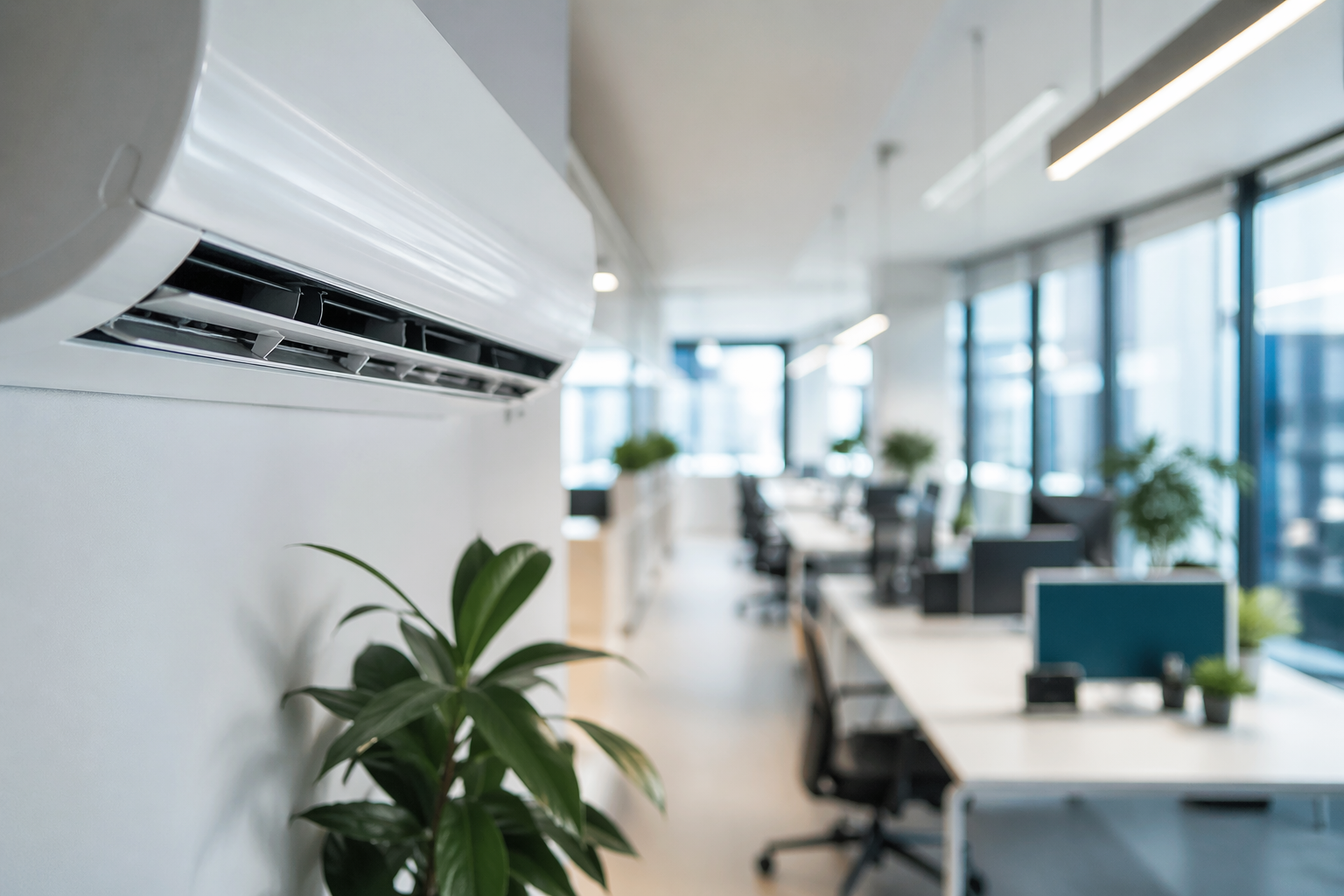
With the heat of these weeks, keeping the office comfortable becomes essential. But what many people don't realise is that every degree you lower the air conditioning can raise your electricity bill by up to 11%.
In a context of rising tariffs and the removal of tax relief on energy, this detail becomes a key point for any company that wants to cut costs without affecting the wellbeing of its team.
What companies should keep in mind this summer
With temperatures rising, keeping the office comfortable without sending the electricity bill through the roof is quite a challenge. Decisions on climate control, efficient energy use and consumption monitoring will be key to balancing wellbeing and savings in these months.
- Air conditioning accounts for 40% of total energy consumption
- Air conditioning often runs without any control over actual occupancy
- Many companies still do not automate or monitor their energy use
- Offices are large spaces with a high thermal load (computers, lighting, people)
Why is it especially critical in offices?
Air conditioning is a fundamental element of offices in summer, as it helps keep the environment comfortable and productive for employees. However, intensive use can mean very high energy spending, which directly affects the company's budget. That is why it is important to understand why this is a critical issue and how we can manage it better.
Key points:
- High consumption in summer: during the hottest months, the air conditioning is often on for many hours a day, considerably increasing electricity consumption. This can account for up to 40% or more of an office's total electricity bill.
- Financial costs: for example, if an office has several air conditioning units running 8 hours a day, the monthly electricity cost for these alone can exceed €150 or €250, depending on the size of the units and the local electricity tariff. Without proper control, this cost can rise even further.
- Impact on productivity: an environment that is too hot affects employees' concentration and performance, but excessive use of air conditioning can also cause discomfort or health problems if the temperature is not properly regulated.
In short, air conditioning is critical because it generates a large energy and financial cost in summer, yet it is also indispensable for a good working environment. That is why using it efficiently is key to saving money and looking after everyone's wellbeing in the office.
How much does each degree lower raise your office air conditioning costs?
Lowering the office air conditioning temperature by just one degree can raise the electricity bill by up to 11%. For example, if an office normally pays around €200 a month in electricity for air conditioning, lowering the temperature by one degree could add about €22 a month to that cost.
If the difference is two or three degrees, the increase in the bill can exceed €40 or even €60, depending on the size of the office and the electricity tariff. That is why adjusting the temperature moderately can mean significant savings without sacrificing comfort.
| Degrees lower | Approximate increase (%) | Increase in euros (€) | New bill (€) |
|---|---|---|---|
| 1 | 11% | 22 | 222 |
| 2 | 22% | 44 | 244 |
| 3 | 33% | 66 | 266 |
| 4 | 44% | 88 | 288 |
| 5 | 55% | 110 | 310 |
These values are approximate and may vary depending on the efficiency of the unit, the electricity tariff and the specific conditions of the office.
Seasonal impact of air conditioning on office energy consumption
In winter, total energy consumption in the office is lower, since the air conditioning is barely used and accounts for only 15% of total energy consumption. In summer, however, energy consumption rises considerably, largely because of intensive air conditioning use, which can account for up to 25% of total energy spending, causing a significant increase in the electricity bill.
| Season | Total energy consumption (kWh/month) | Air conditioning consumption (kWh/month) | Total energy cost (€ / month) | Air conditioning cost (€ / month) | Share of air conditioning in the bill |
|---|---|---|---|---|---|
| Winter | 1,000 kWh | 150 kWh | €150 | €22.50 | 15% |
| Summer | 1,800 kWh | 450 kWh | €270 | €67.50 | 25% |
Air conditioning use in offices has a significant impact on total energy consumption, especially in summer. While its influence is relatively low in winter, in summer it can account for a quarter of energy spending, causing a considerable increase in the electricity bill.
It is therefore essential to implement energy efficiency strategies and control systems to optimise its use and reduce costs.
Tips and recommendations for saving on air conditioning and energy in offices
As everyone knows, air conditioning is the best ally for working comfortably, but it can also be directly responsible for sending your electricity bill soaring. The good news is that keeping a pleasant environment and controlling spending are not opposing goals. With small adjustments and conscious habits, it is possible to optimise air conditioning use without giving up comfort.
Air conditioning is one of the main contributors to energy consumption in offices, especially during the summer months. However, not only can using it efficiently generate significant savings, but combining it with good practices throughout the office also makes it possible to significantly reduce the total electricity bill.
From setting the temperature to 25 °C, to switching the system off in unoccupied areas, cleaning filters frequently or taking advantage of the coolest hours of the day to ventilate, there are several simple strategies that make a difference. Adopting these habits not only reduces air conditioning costs, but also contributes to overall energy savings that benefit both the budget and the environment.
Set an efficient temperature: keeping the air between 25 and 26 °C is enough to stay comfortable and avoid excessive spending
Setting an efficient air conditioning temperature is key to balancing comfort and energy consumption. Keeping the office between 25 and 26 °C is usually enough for employees to feel comfortable without generating excessive energy costs. Every degree below this range can increase energy consumption significantly, by as much as 6-8% more per degree.
This translates into a considerable increase in the monthly electricity bill, especially in the summer months when the air conditioning runs intensively. Therefore, lowering the temperature by just one degree can mean a considerable additional cost, and often the comfort gained does not justify that extra expense.
Adjusting the thermostat to an efficient temperature is one of the simplest and most effective ways to optimise energy consumption without sacrificing wellbeing in the workplace.
How much does it really cost to lower the temperature by one degree?
Although it seems like a small adjustment, lowering the air conditioning thermostat by just one degree can increase energy consumption by between 8% and 11%, according to various sources specialising in energy efficiency. In offices, where climate control systems run for long hours and in large spaces, this difference quickly translates into tens or even hundreds of additional euros a month.
For example, in an office with a monthly bill of €1,000, lowering the air from 26 °C to 23 °C can mean an increase of more than 30% in energy costs. And if the system is also poorly maintained or there are thermal leaks (such as open windows or doors without insulation), the cost multiplies even further.
In short, every degree of extra cooling has a real and significant cost, not only in financial terms but also in sustainability. Sometimes, seeking extreme comfort ends up being a very costly decision for the company.
Ventilate strategically: open windows only first thing in the morning or at dusk so you don't compete with the air conditioning
Ventilating an office strategically is essential for maintaining a healthy environment without compromising the efficiency of the air conditioning. Opening the windows only first thing in the morning or at dusk lets you renew the indoor air when outside temperatures are cooler, which helps cool the space naturally without having to overuse the air conditioning.
Opening windows during the hottest hours can cause the air conditioning to compete with the hot outside air, forcing the system to work harder to maintain the desired temperature. This not only increases energy consumption, but also shortens the lifespan of the equipment because of the additional strain. That is why choosing the right moments to ventilate is key to optimising the use of the climate control system.
In addition, strategic ventilation improves indoor air quality, reducing the concentration of pollutants and fostering a healthier environment for workers. By combining smart ventilation with efficient use of air conditioning, you achieve a balance between comfort, energy savings and wellbeing in the office.
Switch off in unused areas: empty meeting rooms or offices without staff do not need constant air conditioning
Switching off the air conditioning in areas of the office that are not in use is a simple but very effective measure for reducing energy consumption. Empty meeting rooms, offices without staff or unoccupied common areas do not require constant climate control, so keeping the systems off in those spaces avoids unnecessary energy spending.
This practice not only helps lower the electricity bill, but also extends the lifespan of the air conditioning equipment by avoiding excessive operation. It also lets the climate control focus only on the spaces that are actually occupied, improving efficiency and comfort for those who are working.
To make this easier to manage, it is advisable to implement zone controls or automated systems that detect occupancy and regulate the air conditioning accordingly. This ensures responsible energy use, in line with good sustainability and savings practices in the office.
Monitor your consumption directly and manage your spending with complete freedom
Monitoring energy consumption from mobile apps is an increasingly accessible and useful tool for managing spending on air conditioning and other electrical equipment in the office. These apps let you monitor in real time how much is being consumed, identify usage peaks and adjust how the system operates to optimise efficiency.
By managing your spending with complete freedom from these platforms, you can make informed decisions and react quickly to any excessive consumption or misuse of the air conditioning. This makes it easier to put personalised savings strategies in place and helps you avoid surprises on the electricity bill.
In addition, many apps include features for scheduling on and off times, setting consumption limits and receiving alerts, which simplifies energy management and contributes to more responsible and efficient use of air conditioning.
Advertisement
With Naturgy, you decide how much to spend and how much to save. Transparent, simple and with no surprises.

Carry out regular maintenance: clean the filters every 4 weeks to keep the equipment efficient
Regular maintenance of the air conditioning is essential for ensuring its efficiency and extending its lifespan. One of the most important tasks within this maintenance is cleaning the filters, which should ideally be done every 4 weeks. Dirty filters restrict airflow, forcing the unit to work harder to maintain the desired temperature, increasing energy consumption and wear on the system.
In addition, clean filters improve indoor air quality by reducing dust, allergens and pollutants that can affect the health and wellbeing of the people who work in the office. Cleaning the filters therefore not only contributes to energy savings, but also promotes a healthier and more comfortable environment.
Implementing a maintenance and filter-cleaning schedule is a simple measure that can generate significant savings on the electricity bill and avoid costly repairs in the long run. This ensures optimal operation of the air conditioning, with lower consumption and better performance.
Advertisement
Aquaservice: beat the heat with cold water always at hand
Home delivery service for households and businesses. Up to 30% off for your convenient and sustainable water.

👉 See the terms and conditions
Close doors and windows while the air conditioning is on: you will avoid leaks and unnecessary loss of cool air
Closing doors and windows while the air conditioning is on is an essential practice for avoiding cool air leaks and unnecessary energy loss. When doors or windows stay open, the system has to work harder to compensate for the escaping air, which increases electricity consumption and reduces the efficiency of the equipment.
In addition, keeping these openings closed helps maintain a stable temperature inside the office, providing greater comfort for workers without additional effort from the air conditioning. This also helps extend the lifespan of the system, as it reduces wear from longer operating cycles.
Finally, adopting this habit is a simple and inexpensive way to improve the energy performance of the office, with a positive impact on the electricity bill and on the sustainability of the workspace.
Inform the team: building good habits among employees makes a difference to the final bill
Informing and raising awareness among the team about the importance of efficient air conditioning use is key to achieving real savings in energy consumption. When employees understand how their daily actions, such as setting the temperature appropriately or switching the system off in empty areas, directly affect the electricity bill, a culture of responsibility and savings is fostered within the office.
Building good habits among staff not only improves energy efficiency, but also contributes to a more conscious and sustainable working environment. Involving everyone in looking after the climate control system can multiply the positive results, since every small gesture counts and adds up to the shared goal of reducing costs and protecting the environment.
It is therefore advisable to run internal campaigns, hold information talks or put up visible reminders that reinforce these messages. In this way, you build a committed team that understands that its cooperation is essential to making a difference to the final bill and to the office's energy footprint.
Conclusion
Using air conditioning in offices during the summer is essential for maintaining a comfortable and productive working environment. However, intensive use can cause a significant increase in energy consumption and, as a result, in operating costs. Every degree the air conditioning temperature is lowered can increase electricity consumption by approximately 8%, which translates into a proportional increase in the company's energy bill. For example, if an office usually pays €200 a month in electricity, lowering the temperature by one degree could add about €16 a month to that cost.
Implementing energy efficiency strategies, such as scheduling operating hours, using blinds or curtains to block direct solar radiation and optimising the thermal insulation of the premises, can contribute significantly to reducing energy consumption. These measures not only help lower operating costs, but also promote a more sustainable and healthy working environment.
In short, although air conditioning is indispensable for comfort in offices during the summer, its use must be managed efficiently to avoid unnecessary increases in energy consumption and associated costs. Adopting energy efficiency practices and properly maintaining the equipment are essential for achieving a balance between comfort, savings and sustainability in the workplace.
Read also: Myths and truths about electricity consumption – Stop overpaying