
Ranking your website among the top search results on the internet is essential, but it is not an easy task. However, with the right strategies you can attract quality SEO traffic that actually converts.
In this article you will discover 7 fundamental keys that will help you improve your visibility on Google, optimize your content and attract visitors interested in your products or services.
In this article you will discover practical and effective strategies to improve your ranking, increase organic traffic and attract qualified users interested in your products or services. Keep reading and turn your website into an SEO traffic magnet.
Below we clarify some technical termsTo better understand how SEO works and how to create valuable content, it is important to know certain key concepts. Below, we explain in simple terms some of the most commonly used terms, so that you can apply them effectively in your digital strategy and improve your website's ranking.
| Term | What it means | Simple example |
|---|---|---|
| Website | A site or page on the internet where you publish information, products or services | Your company page or blog |
| Standing out in search engines | Appearing among the first results on Google, Bing, etc. | Your website appears on the first page when someone searches for your product |
| Valuable content | Useful, relevant and well-presented information for users | Articles, videos or infographics that answer your visitors' questions |
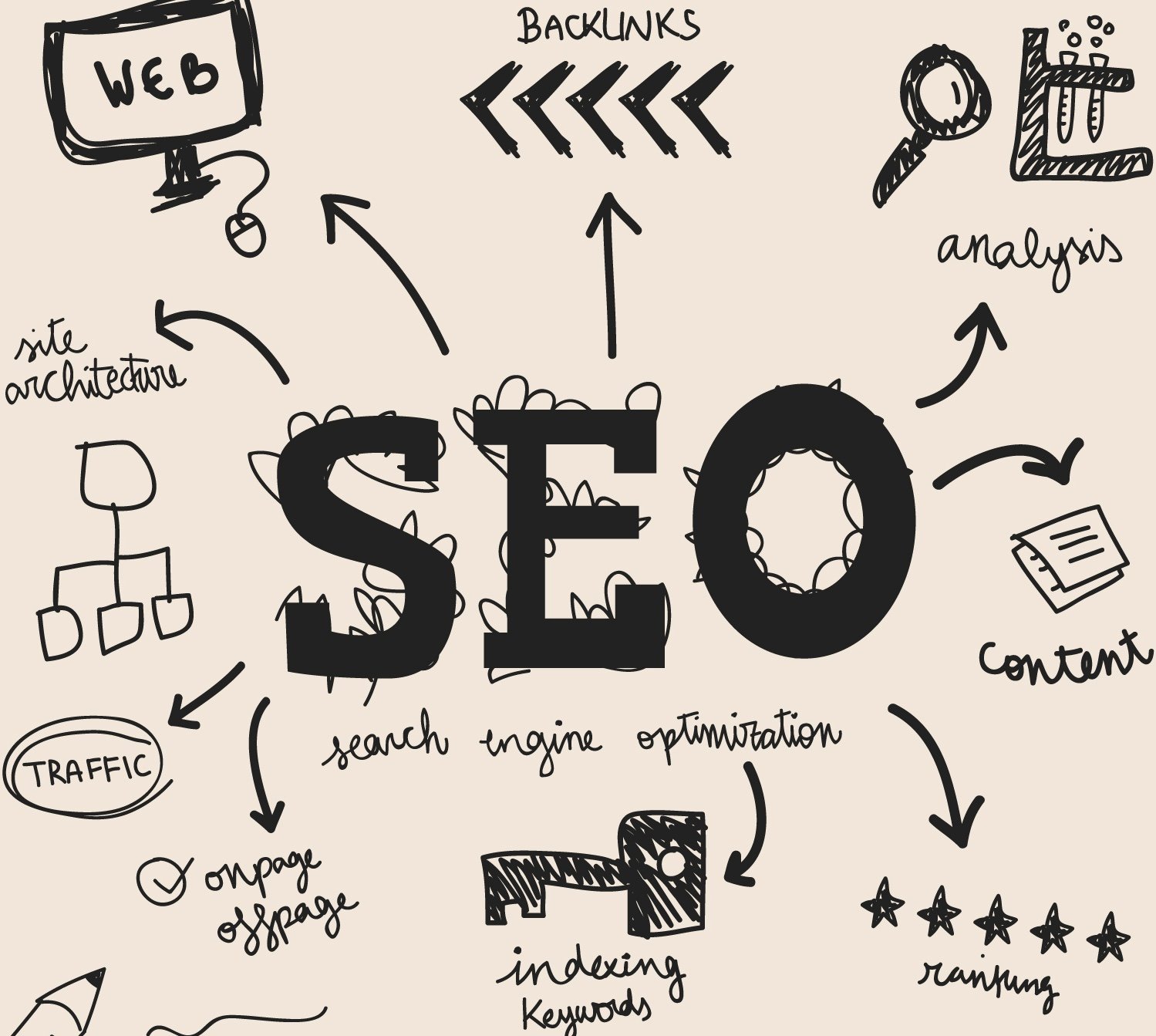
| SEO (Search Engine Optimization) | A set of techniques that help search engines understand your website and show it to the right audience | Using keywords, clear headings, links and fast loading speed |
| Keywords | Terms that users type into search engines and that should appear in your content | “How to create SEO content” |
| Headings and subheadings (H1, H2, H3) | Content structure that organizes ideas and makes reading easier | H1: Main title, H2: Subtopic, H3: Details |
| Internal links | Links within your website that connect pages to each other | From the SEO article to the digital marketing article |
| External links | Links to authoritative sites that complement your content | Linking to Moz or HubSpot for SEO guides |
| User experience | How easy and pleasant it is to browse your website | Your page loads fast, looks good on mobile and is clear |
| Organic traffic | Visitors who reach your website from search engines without paying for advertising | People who find your blog when searching on Google |
The Power of Attracting Traffic with Valuable SEO Content
If you want your website to stand out in search engines, you need to create valuable SEO content. It is not just about including keywords, but about offering useful, engaging and well-structured information that truly answers your audience's needs. Optimized content not only improves your visibility on Google, but also turns visitors into loyal customers.
Why is it important to rank your website?
As we mentioned earlier, ranking your website among the top search results is key to increasing your brand's visibility, attracting genuinely interested visitors and generating more business opportunities.
A good SEO strategy not only increases organic traffic, but also improves the user experience, builds trust and authority, and reduces customer acquisition costs in the long run. In short, investing in web ranking means investing in the sustainable growth of your online business.
Next, you will discover the main advantages of having good web rankings and how they can transform the way your audience finds you and connects with you.
1. Increase your brand's visibilityIf your website appears among the first search results, not only will the number of visitors who discover it organically increase significantly, but it will also boost your brand recognition in your industry. Ranking well conveys professionalism and authority, which builds trust among both potential customers and business partners.
In addition, appearing in the top positions improves the perception of your business, since users tend to associate higher positions with reliable and relevant sites. In the long term, this constant visibility not only increases web traffic, but also helps to strengthen your brand's reputation, encourage visitor loyalty and open up new business opportunities, from sales to strategic partnerships.
2. Attract qualified trafficSEO gives you the opportunity to connect with users who are already interested in what you offer, since they are actively searching for your products, services or related information. This makes the traffic that reaches your website highly qualified and much more likely to become customers, subscribers or quality leads.
Unlike other, more general marketing strategies, SEO attracts people with a clear intention to buy or act, which significantly increases the likelihood of conversion. In addition, by capturing consistent organic traffic, you not only improve your immediate sales, but also establish a solid base of returning visitors who trust your brand and come back for relevant content or additional products.
3. Reduce customer acquisition costsUnlike paid advertising, where every click or impression has a direct cost, the organic traffic obtained through SEO does not require constant payment, which makes it a much more profitable long-term investment. Once your website reaches a good ranking, visitors will keep arriving continuously without generating additional costs for each user who accesses your site.
This means that the initial effort in optimization, creation of valuable content and technical improvements can generate a steady flow of qualified traffic for months or even years.
Moreover, unlike pay-per-click campaigns, SEO also brings side benefits such as strengthening your brand's authority, improving the user experience and building trust among your visitors, elements that cannot be obtained with paid ads alone.
4. Improve the user experienceOptimizing your website for SEO is not limited to adding keywords; it also involves improving technical and user experience aspects, such as loading speed, navigation structure and the overall usability of the site. A fast, well-organized site not only makes it easier for Google to index and rank your content more effectively, but also offers visitors a more pleasant and efficient experience.
When users can navigate intuitively, find the information they are looking for effortlessly and access your content without delays, they are more likely to stay longer on your website, engage with your resources and come back in the future. In addition, these technical factors indirectly help improve your ranking, since search engines value sites that offer an optimal user experience.
5. Build authority and trustRanking well in search results not only increases your website's visibility, but also strengthens the perception of professionalism and credibility of your brand. Users tend to associate the top spots on Google with reliable and relevant sites, which has a positive effect on your business's reputation.
This initial trust makes it easier for visitors to explore your content, interact with your services or products and, finally, become loyal customers. In addition, good rankings send authority signals to search engines, consolidating your online presence and increasing the chances of attracting qualified traffic consistently.
6. Increase business opportunitiesWhen your website receives more traffic and gains greater visibility in search engines, the opportunities to generate tangible results also increase significantly. This steady flow of interested visitors can turn into qualified leads, actual sales or subscriptions, depending on the specific goals of your site.
The easier it is for users to find your content and see it as relevant, the greater the likelihood that they will take valuable actions, such as filling out forms, downloading resources or purchasing products and services. In addition, this effect multiplies as your website consolidates its authority, since new visitors trust a site that consistently appears among the first results and offers quality content.
In short, increasing traffic not only improves the numbers, but also boosts the real impact of your online strategy, contributing to the sustained growth of your business.

Complete Guide to Creating Valuable SEO Content That Google Approves
Now that you understand why it is essential to rank your website, it is time to discover the 7 main keys that will help you attract quality SEO traffic. These strategies range from keyword selection to content optimization and measuring results, including techniques that improve the user experience and strengthen your site's authority.
Keep reading to learn step by step how to implement each key and take your website to the top spots in search engines, increasing visits, conversions and brand recognition.
1. Know Your Audience
Before writing, define who you are addressing:
- Identify your target audience and their interests.
- Analyze frequently asked questions and the problems they are trying to solve.
- Define what type of content (blog, video, infographic) they prefer to consume.
Knowing your audience ensures that your content is relevant and useful.
2. Do Keyword Research
SEO starts with a good selection of keywords:
- Look for primary and secondary keywords.
- Analyze search volume and competition.
- Include variations and long-tail keywords to attract targeted traffic.
This allows you to rank your content more effectively and capture interested users.
How to Find the Best Keywords
Choosing the right keywords is the first step to creating content that truly ranks. Start by thinking about how your audience would search for your products or services.
Use tools such as SemRush, Google Keyword Planner or Ahrefs to discover terms with good search volume and moderate competition.
Combine primary keywords with long-tail variants (more specific ones) to attract quality traffic and better respond to your users' search intent.
3. Create Original, High-Quality Content
Valuable SEO content must be unique and in-depth:
- Write articles of at least 1,500-2,000 words for each complex topic.
- Explain concepts clearly and in a structured way.
- Use examples, statistics and practical cases to reinforce the information.
Originality and depth build trust and authority with Google and your readers.
4. Optimize Your Content Structure
Well-structured content improves readability and SEO:
- Use headings and subheadings (H1, H2, H3) with relevant keywords.
- Divide the text into short paragraphs and lists for greater clarity.
- Include internal and external links to authoritative sources.
This helps search engines understand your content and improves the user experience.
Read also: The 5 Essential Phases of Online Content Creation for Businesses
5. Add Multimedia
Images, videos and graphics increase engagement:
- Include infographics to summarize complex data.
- Use optimized images with relevant alt text for SEO.
- Add explanatory videos or tutorials if possible.
Visual content keeps readers on your website longer and reduces the bounce rate.
6. Promote and Distribute Your Content
Good content needs visibility:
- Share on social media and newsletters.
- Collaborate with influencers or industry portals.
- Encourage comments and reader participation.
This generates social signals that help your ranking and increases your reach.
7. Measure, Adjust and Update
SEO is an ongoing process:
- Review metrics such as traffic, time on page and conversions.
- Update old articles to keep them current.
- Adjust keywords according to search trends and changes.
Constant improvement ensures that your content remains relevant and visible.
Conclusion: Create Content That Google Loves
Knowing how to create valuable SEO content is not just about writing keywords strategically, but about offering useful, relevant information that truly answers your readers' needs. When you balance search engine optimization with the user experience, your website becomes a reliable resource, builds authority and attracts quality traffic that is more likely to turn into customers, subscribers or loyal followers.
Creating valuable SEO content requires a comprehensive approach: first, get to know your audience and understand their problems, interests and frequently asked questions. Then, optimize every text by applying SEO best practices, such as choosing strategic keywords, structuring headings correctly, using internal and external links, and including visual elements that make the content easier to understand.
In addition, it is essential to constantly update and improve your content, since SEO is not static. Google rewards fresh and relevant information, and users value content that stays up to date, complete and easy to consume.
Finally, remember that the ultimate goal is to produce content that provides real value, that informs, educates or entertains, while ranking your website effectively. When you achieve this combination, you not only improve your search engine ranking, but also build a solid relationship with your audience and establish your site as a reference in your industry.
Creating valuable SEO content is, therefore, a long-term investment that boosts your visibility, strengthens your authority and maximizes the impact of your online presence.
Ready to get started? Apply these strategies and turn your website into a traffic magnet 🚀
🔻 Read also: Funnel Marketing: How to Attract Truly Interested Customers?