
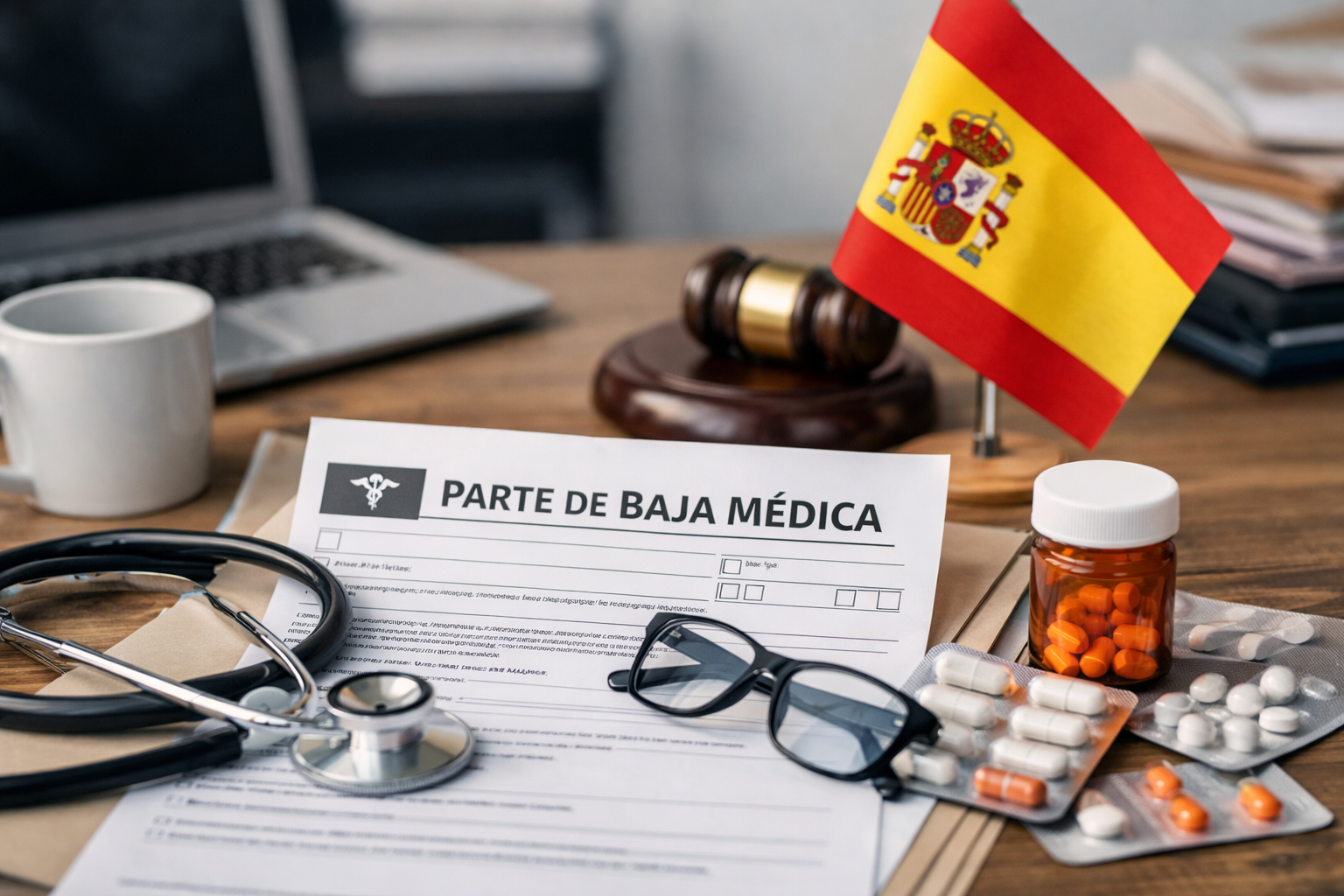
Sick leave (Incapacidad Temporal or IT, temporary incapacity) is one of the most common situations in the workplace in Spain. It affects not only the employee's health, but also the internal organisation of companies, productivity and the costs associated with absenteeism.
According to the current regulations, sick leave is a legally recognised situation in which the employee cannot carry out their work for health reasons and receives medical care together with a financial benefit during their recovery.
The key points
Notification and deadlines 📄
- The company must inform Social Security (Seguridad Social) within three working days of receiving the medical leave certificate.
- The employee must hand the sick leave certificate to the company within a maximum of three days.
Payment of the benefit 💰
- For common illness, the benefit is paid from the 4th day (the first 3 days are not paid).
- For work accidents or occupational illness, the benefit is paid from the first day and is usually handled by the mutual insurance fund (mutua).
Return to work and follow-up 🔄
- The employee can only return to work with the medical discharge certificate.
- The company may monitor the situation, but it cannot demand a return before the medical discharge.
You may also be interested in: Managing the Temporary Incapacity benefit – Procedures and Formalities
Types of Sick Leave
The most common types of sick leave that companies deal with are usually:
Common illness – Applies when the employee suffers an illness or injury unrelated to work.
Work accident – Occurs when the employee suffers an injury or illness arising from their work activity.
Occupational illness – Applies when the illness is caused by exposure to risk factors at work.
Maternity/paternity – Granted to employees after the birth, adoption or foster care of a child.
Risk during pregnancy or breastfeeding – Applies when the work activity may affect the health of the mother or the baby.
Temporary incapacity – Covers all situations in which the employee cannot carry out their work for a limited period of time.
Stress or mental health – Increasingly common, it occurs when the employee suffers psychological or emotional problems arising from work.
Management by the employee
- Obtaining the sick leave certificate: the employee must see a doctor who, after the relevant assessment, issues the sick leave certificate for temporary incapacity.
- Notifying the company: the employee must inform the company and hand in the sick leave certificate within a maximum of three days.
- Medical discharge and return to work: once the doctor considers the employee fit for work, they will issue the discharge certificate. The employee must return to their post within the following 24 hours and hand the discharge certificate to the company.
Advertisement

Management by the company
Managing sick leave on the company's side involves a series of administrative steps and communication with the employee, Social Security and, in some cases, the mutual insurance fund.
Receiving the medical leave certificate
📌 The employee must submit the medical leave certificate issued by their doctor within three days (or 24 hours in the case of a work accident).
Notifying Social Security
📌 The company must report the leave to Social Security through the RED System (Sistema RED, the online reporting system) within a maximum of 3 working days of receiving the certificate.
Calculating and paying the benefit
📌 During the leave, the company may continue paying the employee and then offset the amount against Social Security, or the mutual insurance fund handles the payment, depending on the type of leave.
- Common illness or non-work accident → Paid from the 4th day. The employee receives 60% of the regulatory base from the fourth to the twentieth day, and 75% from day 21.
- Work accident and occupational illness → Paid from the first day. The employee receives 75% of the regulatory base from the first day of leave.
⚠️ How much does a medical emergency cost a company in Spain?
Follow-up during the leave
The employee will receive periodic confirmation certificates that they must submit to the company to justify the continuation of the leave.
📌 The company may monitor the employee's condition, but it cannot demand their return without medical discharge.
📌 If fraud is suspected, the company may ask the mutual insurance fund or the INSS (National Social Security Institute) to review the case.
Handling the medical discharge
📌 Once the employee receives the discharge certificate, they must return to work immediately.
📌 The company must report the discharge to Social Security within 3 days.
Final considerations
Sick leave is a fundamental right of employees and a responsibility that companies must manage correctly. It is essential to meet the deadlines and procedures to avoid penalties and ensure that the employee receives their financial benefit on time. In addition, the company must carry out appropriate follow-up, safeguarding the employee's wellbeing without pressuring them to return before receiving medical discharge.
Efficient management of sick leave not only benefits the employee, but also helps the company maintain a healthy working environment and meet its legal obligations.