

It is generally assumed that when a company is looking for new employees, it is the candidates who have to prepare for the job interview and catch the attention of the recruiters. However, that is not true, because the structure of the interview itself and the way the brand is presented can influence the attraction of new talent that could enrich the company.
In this article we will give you some tips for building a potentially successful job interview that allows your company to recruit valuable, thriving professionals.
Image by wayhomestudio on Freepik
How is a job interview structured?
The interview is crucial in the selection process, since it determines whether the candidate joins the company. It is essential to handle it properly and ask the right questions to avoid mistakes that could affect the process. Identifying the candidate's skills, understanding their motivations and clearly explaining the opportunities the company offers are key to a successful interview. Recruiters must structure it carefully and avoid irrelevant questions. It is important to learn and apply the right strategies to plan and run an effective interview.
That said, keep in mind that every job interview is different. Questions often vary depending on the industry, the type of position to be filled and more. However, there are some standard elements that tend to recur in every kind of interview. Below are some examples, divided into points with some tips for better managing every phase of the interview.
A short description of the company as a self-introduction
After a brief excursus on the history of the company, it is important to talk about the business mission and future goals.
Specifically, it is crucial to: give the candidate a warm welcome to create a comfortable atmosphere; show the workplace, either virtually or by describing it in detail; describe the position clearly, its responsibilities and goals, answering the candidate's questions. It is also important to explore the candidate's personal motivations for the position and their previous experience, and to present the mission, values and history of the company to highlight its appeal as an employer.
What questions should you ask the interviewee?
Interviews are essential in personnel selection, since they provide the opportunity to make informed decisions. It is crucial that recruiters prepare relevant questions to assess the candidate's fit with the team and the company's values, covering both personal and professional aspects. The questions should reveal whether the candidate matches the profile of the position and whether their previous skills match the new role.
The key areas to cover include the candidate's self-description, their professional challenges and achievements, and their reasons for choosing the company, among other important aspects. These questions make it possible to assess the candidate's fit with the position and the company.
- How would you describe yourself in one word? This question gives the candidate the chance to describe themselves both professionally and personally.
- What has been your greatest professional challenge/success? This question helps you understand how the candidate faces difficult situations and reveals their skills.
- Why do you want to work at our company? Although it may seem obvious, it is crucial for understanding the candidate's real motivations for choosing the company.
- Do you prefer working in a team or independently? It helps determine the candidate's inclination towards teamwork.
- What are your strengths and weaknesses? This question reveals the candidate's strengths and weaknesses and their attitude towards them.
- Where do you see yourself in the future?
Types of job interviews

Although all job interviews follow a fairly standard structure, you should know that there are different types. You do not need to know them perfectly, just to make the most of the different situations depending on the opportunity that comes your way. So let us look at the different types of job interviews and tips for preparing better.
Whatever type of interview is chosen, there is one common denominator: punctuality, a crucial element for the reputation of the brand. In fact, keeping to schedules is essential to show seriousness and authority. We cannot expect seriousness and punctuality from others if we do not demonstrate them ourselves first.
Image by yanalya on Freepik
The cognitive job interview
The cognitive interview is fundamental in the selection process, regardless of type, since it is the most common one. At this stage, the recruiter evaluates the candidate as a whole, focusing on personal skills and past work experience. It is often carried out even without specific vacancies, with the aim of building a database of profiles for future opportunities. It can be conducted by the Human Resources department or by an employment agency appointed by the company.
Quite often, the cognitive interview is combined with an aptitude test, which is essential for assessing the candidate's skills, attitudes and fit with the company. The aptitude interview evaluates the candidate's ability to solve problems, work in a team and manage time. It is important to understand that in this type of test there are no right or wrong answers, as the aim is simply to find the match between the candidate and the company.
The job interview by videoconference
In our digital age, the job interview by videoconference (via Skype, Zoom, Microsoft Teams and others) is becoming popular among companies thanks to its efficiency in personnel selection. Although it offers benefits, it requires different precautions from traditional interviews. To prepare properly, first of all make sure the audio, video and connection of your device are set up correctly. It is also important to plan ahead the expected length of the interview so that all the phases fit, especially if more than one interview is scheduled per day.
Online interviews keep the purpose and structure of traditional ones, but change the medium. They can include cognitive and motivational interviews, as well as second or third rounds as needed. They offer flexibility for companies and candidates, eliminating travel. However, group interviews and technical tests can be challenging online, especially if they require complex interactions or specific equipment.
The telephone job interview
The telephone interview is a primary screening method used by companies to assess a large number of candidates in a short period of time. Generally shorter than an in-person interview, the telephone interview is usually the first step in the hiring process and serves to understand whether the candidate has the basic skills and an interest in the position. However, you should never underestimate the importance of a telephone interview. Even though the interviewer will not see you, you must make a good impression.
Here are some tips on how to prepare for a telephone interview:
- Do some preliminary research on the company and the position.
- Find a quiet place with good reception for the interview.
- Communicate clearly, speaking slowly and answering fully.
- Keep a professional attitude, even over the phone, and watch your posture, as it affects your tone of voice.
The group job interview
Group interviews are used by some companies in their selection process to assess key skills such as communication, collaboration, leadership and conflict management in an environment that simulates teamwork.
During a group interview, candidates interact with other applicants for roles, often through structured activities or discussions on specific topics. Their behavior during these activities can give observers valuable information about their ability to work effectively in a group setting and to handle pressure situations.
It is important to stress that success in a group interview is not measured only by the ability to take charge. Highly valued qualities also include: active listening, empathy, respect for others' ideas and the ability to contribute constructively to the discussion.

Image by tonodiaz on Freepik
The step by step interview
Many companies choose to interview a candidate more than once. Generally, after the initial cognitive interview, the second and sometimes the third job interview are crucial stages in the selection process. These focus on the specific position, the skills required and the candidate's fit with the work environment. The second interview, often conducted by a company representative, goes deeper into technical skills, work experience and details of the position. Passing this stage is usually the last step before receiving a job offer, but in some cases a third interview is required, especially for senior positions or to tell similar candidates apart.
However, not all companies conduct more than two interviews, but if they do, it may indicate a specialized profile for the position, which means being prepared for one last step. The third interview is held among a small group of candidates, in the final selection stage. Here, your motivation and preparation will be key to standing out among the last candidates, showing once again why you are the best choice for the position. It is your last chance to convince the company that you are the right person for the team.
In short, to improve objectivity in candidate selection, it is essential to diversify the forms of assessment, such as aptitude tests, and to apply strategies to detect possible deception during interviews.
Final phase
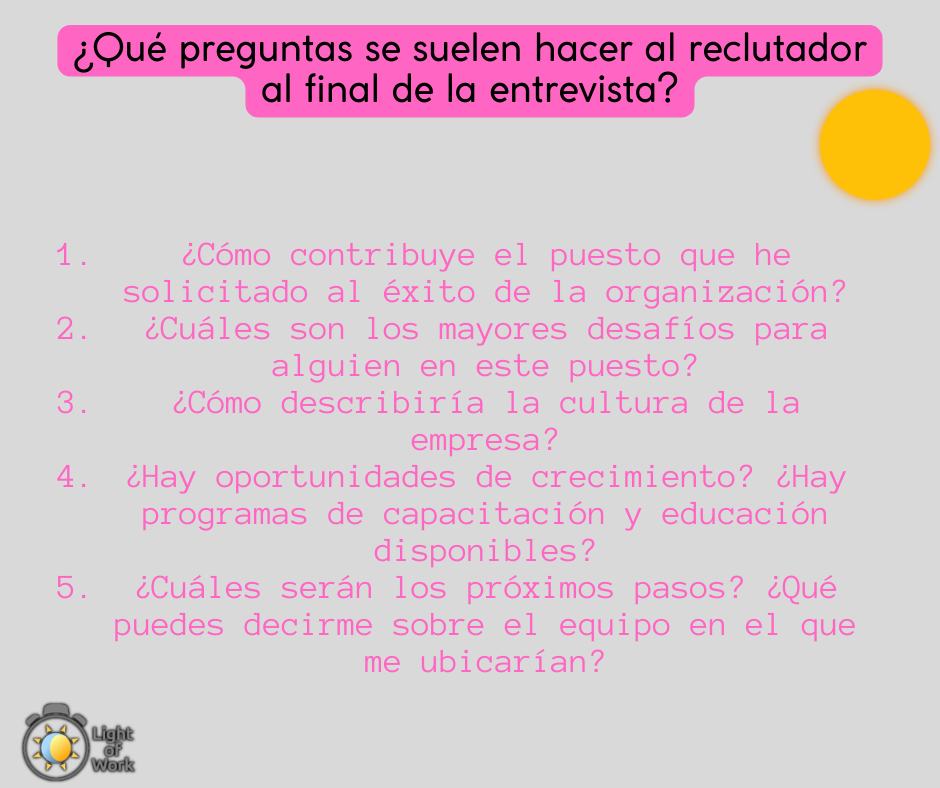
It is often thought that during job interviews only recruiters have to ask questions. Nothing could be further from the truth.
The final phase of the interview is in fact an excellent opportunity for the candidate to gather as much information as possible about the company and the position to be filled through a few questions. This allows you not only to understand whether the position is really right for you, but also to show recruiters that you are interested and more motivated to take this path. An opportunity that, if used well, can help you improve your standing even further with the recruiters.
Conclusions
Senior positions and large companies usually require more interviews. Every interview is an opportunity to prove your worth, so prepare and keep a positive attitude. It is crucial to understand the types of interviews in order to face any challenge.
The number of interviews before hiring can vary depending on several factors, such as the location, size and structure of the company, as well as the industry and the competition among candidates. In any case, it is essential to have good planning in order to organize and evaluate each candidate efficiently. S
Whatever the type of interview, it is important to come across as clear and decisive, avoid hasty answers and hesitation, and be honest. Prepare by researching the company and its values to show motivation and leave a good impression on the recruiter.
Light of Work is a time tracking, absence and vacation management system. Free download